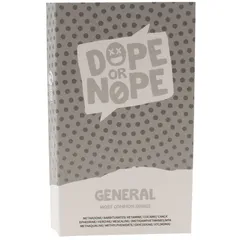
A colour on a Dope or Nope test means one thing: the sample probably contains (some of) the substance or substance family on the chart. It does not tell you how much of it there is, whether something else is mixed in, or whether the sample is safe to use. Reagent tests are presumptive tests: they give a quick indication, and only a laboratory can confirm what a sample is (Wikipedia, reagent testing).
The three possible outcomes
| What you see | What it means | What to do |
|---|---|---|
| A colour that matches the chart | The expected substance is probably present | Remember the limits below; the amount and other ingredients stay unknown |
| No reaction | The substance on the chart is not present | Throw the sample away |
| A colour that is not on the chart | You are not dealing with the substance on the chart | Throw the sample away |
The last two rows come straight from the leaflet in every pack: when you see no reaction or a different one, you cannot say with certainty what the sample is. It might be harmless, or extremely dangerous.
A colour says nothing about purity
The regular tests show presence, not quantity. A powder that is five percent cocaine and one that is eighty percent cocaine can give the same colour. The purity kits for cocaine, MDMA and heroin give an indication of purity from their own chart, but they are still colour tests in a small ampoule. Light, the amount of sample and the time you wait all influence what you see.
False negatives: when the test misses something
A test can stay silent while the substance is there. Common reasons:
- Too little sample, or too much. Use the pinhead amount the pack asks for.
- A badly stored test. The pack asks for cool, dark storage below 35 °C in the original packaging. A test kept warm or in the light may not react as intended.
- The wrong kit. Each test looks for specific substances. The General test, for example, has no field for LSD, GHB or 4-FA.
False positives and look-alike colours
A colour can also point you the wrong way. Different substances can give similar colours with the same reagent: on the chart of the General test, cocaine and crack share orange with methaqualone and methylphenidate, and heroin shares black with mescaline. Use a specific test to narrow it down, and take any doubt as a reason not to use the sample.
Cutting agents and hidden substances
Most street drugs are cut. FRANK lists, among others, benzocaine in cocaine, caffeine and paracetamol in speed, and other stimulants in ecstasy pills (FRANK). A test that confirms the main substance usually says nothing about these. That matters most when the hidden substance is stronger than the expected one: FRANK warns that potent synthetic opioids called nitazenes have turned up in a wide range of drugs. No Dope or Nope test is designed to find them.
When a lab analysis is better
Drug checking services analyse samples in a laboratory and can tell you what is in them and how much. They exist in several countries, for example DIMS in the Netherlands and Energy Control in Spain, which also accepts samples by post through its international service. The page on harm reduction and help lists them per country.
Read on
- How to use a Dope or Nope test
- The General drug test and its colour chart
- Frequently asked questions
Updated: